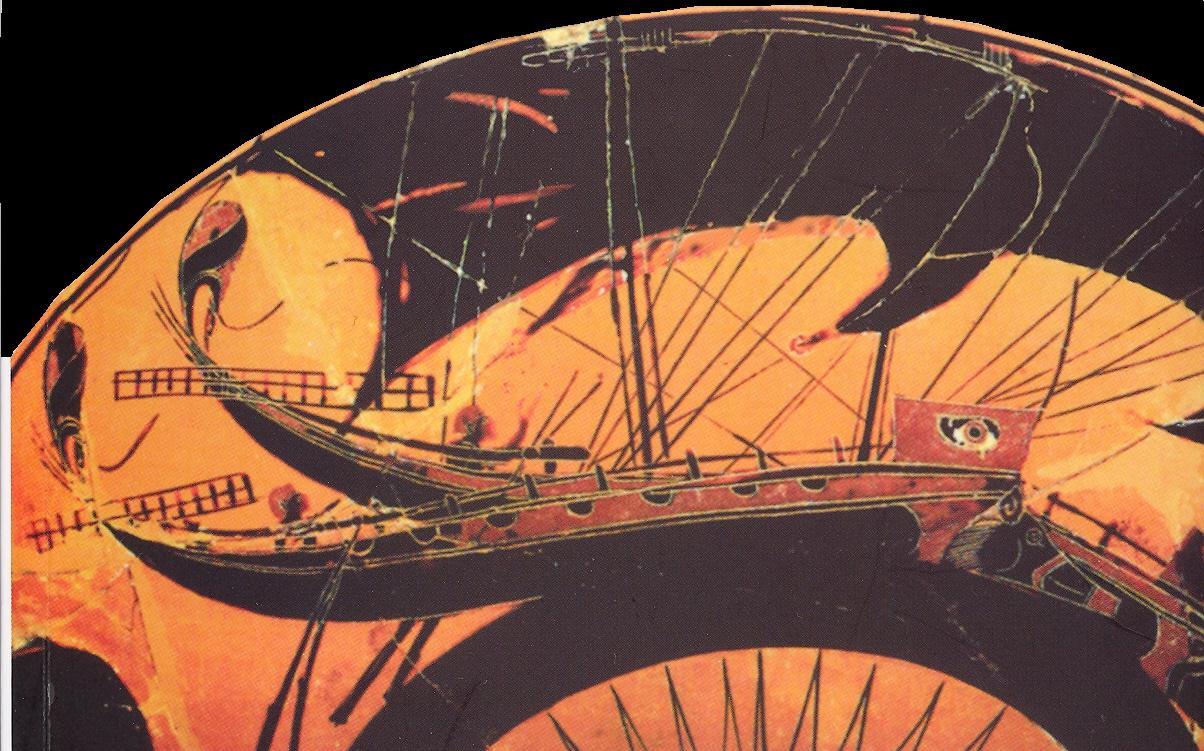
Consider the following story: An honest merchant in Alexandria hears about a famine on Rhodes and immediately sets sail to the island carrying grain. Arriving on Rhodes as the first of many other ships, the merchant has the opportunity to either disclose the information that more ships are coming or conceal that information. Concealing the information, thereby using his information advantage, would mean that the merchant can demand a higher price for his grain. This story, often called ‘the Merchant of Rhodes’, has been used since antiquity to discuss the intricacies of morality. Cicero, among others, argued that the merchant has a duty to disclose his information to the Rhodians and that, more generally, it is morally obligatory to equalise what economists call information asymmetries. In contrast, one might argue that the merchant’s information advantage is simply part of conducting business and no duty to disclose the information exists.
On the one hand, information asymmetries are intuitively permissible. After all, gaining information itself might often come with a cost, be it directly monetary (through investing in market research) or through investing in a lengthy process to gain specialised knowledge (education or work experience). Even if information was acquired by luck (such as in the case of the Alexandrian merchant), this advantage is not necessarily unfair. Information asymmetries, and the possibility to profit from them, are closely connected with innovation. Thereby, equalising information asymmetries seems not only unfair for the information-rich agent but could also hinder innovation and technological advancements.
On the other hand, agents can use information asymmetries to exploit others, and they can lead to a wide array of inefficient market outcomes, like higher prices, less competition, or lower product quality. In economic theory, information asymmetries are considered to be problematic when they lead to such inefficiencies, understood as deviations from the optimal market outcome. Beyond these minimal boundaries, however, economic theory has no tools to criticise information asymmetries in a moral sense.
This ambivalence invites the question of how we can evaluate the permissibility of information asymmetries. Following our moral intuitions, there seem to be several factors why the relationship between two agents, such as a buyer and a seller, might be problematic, warranting us to speak of an ‘exploitation’ or, as I will call it, ‘domination’. This is the specific kind of wrong Cicero seems to have in mind and cannot be captured by economic theory. We can recognize three distinct factors of relevance in the case of the merchant of Rhodes.
First, the consequence of the information asymmetry matters. For example, it is important how the increased price affects the Rhodians, meaning whether the Rhodians are still able to buy the grain or not. The moral wrong involved is much graver when the Rhodians starve than when they simply have to give up some of their wealth, which they were renowned for in antiquity.
Second, the kind of information involved is morally relevant. One might point out, for example, that laws need to be publicly known and that using sensitive information about a soon-to-be adopted law for one’s advantage is wrong. In the case of the merchant of Rhodes, the information about the subsequently arriving ships cannot be expected to be publicly available knowledge. Therefore, there seem to be kinds of information which are more readily permissible to be used in information asymmetries.
Third, and more abstractly, if there is an information asymmetry, it matters whether the information-poor agent still has sufficient information overall. This point depends on how one defines the sufficient level of information, but it seems intuitive that there might be situations where the agent has so little information that the resulting decision cannot be called sensible, authentic or autonomous. The Rhodians, for example, do have sufficient information. They possess general information about prices and the usual behaviour of merchants. This allows them to make a sensible decision whether they want to pay the Alexandrian merchant or not. I will return to these points briefly.
The precise meaning of these three morally relevant factors depends on one’s overarching normative framework. One way to make sense of our intuitions and to normatively assess information asymmetries is through the notion of ‘domination’. Domination, while also used in other traditions such as Marxism, is commonly associated with contemporary republican thinking. There, being truly free is the absence of domination, meaning being free of the subjection to the will of others. Freedom in the republican sense necessitates a form of structural independence, allowing citizens to be shielded from arbitrary interference.
In the economic realm, to be free of domination might mean being able to have economic agency, i.e., agency in acquiring necessary resources for one’s autonomous life. Problematic information asymmetries are then those which allow one agent to arbitrarily impose their will onto the other agent, specifically in a way which removes economic agency. While somewhat vague, this framework allows us to better assess information asymmetries, differentiate permissible from impermissible information advantages, and consider potential remedies.
Reconsider the three previously mentioned factors. Regarding the first, the consequences of the information asymmetry, we can consider an information asymmetry to be problematic insofar as it results in one agent being unable to exercise his economic agency. While often it is the information-poor agent who is dominated, that is not necessarily so. One example in the contemporary economy is credit scoring, which is the evaluation of the creditworthiness of a loan applicant. Here, ‘creditworthiness’ denotes the ability to service the prospective loan. While it is conceptually easy to distinguish between creditworthy and -unworthy applicants, to practically do so is very difficult. One of the main reasons is information asymmetry, where the lender knows much less about the credit application than the applicant. This leads to a situation where, due to an information asymmetry, the lender may not give out loans to otherwise creditworthy applicants. Since loans often allow debtors to make investments that are necessary from the perspective of their economic agency, not receiving a loan as a creditworthy applicant can be highly problematic. Therefore, in these cases, information asymmetries can lead to dominating relationships.
A related example illustrates both the second and third factor, namely the complete lack of fundamentally relevant information in financial markets. Most consumers lack understanding of basic financial concepts such as interest rates or inflation, what is often called financial literacy. This makes them vulnerable and susceptible to being dominated by financial agents such as banks. Through the concept of domination, we can both determine what kind of information can be considered necessary and when an agent might lack sufficient information to make a sensible, informed decision at all. The former being the kind of information which is necessary to make an autonomous decision, and the latter being a threshold which allows the agent to make any autonomous decisions. Both criteria do not seem to be fulfilled in the case of financial literacy, considering that most consumers are unable to understand the consequences of their financial decisions, including when acquiring financial products. Therefore, financial literacy can be considered as necessary, minimal information whose lack can easily lead to a dominating relationship.
The question of whether an information asymmetry leads to domination and is hence impermissible is connected with the broader information environment in an economy. Information asymmetries can be particularly problematic when certain kinds of information are monopolized or oligopolized. Notable examples include when only certain information is authorized, such when credit rating agencies authorize information about the quality and risk of financial products. The issue with these agencies is particularly noticeable when there is an incentive for them to give good ratings, for example, because those issuing the financial products are also paying for the rating service. Therefore, there is an incentive to misrepresent the true quality of financial products, leading to a situation where all other market participants are not able to correctly assess the risk.
These examples indicate the importance of what Lisa Herzog calls ‘epistemic infrastructure’, which can guarantee that there are sufficiently diverse producers and distributors of good information. Regarding many goods, consumer protection organisations and interest groups, as well as state-led campaigns, play an important role in informing consumers but are rarely sufficient. Beyond that, some of our intuitions regarding the impermissibility of using certain information asymmetries have already cemented themselves in law. Most noticeably, there are restrictions regarding which information needs to be shared with a potential buyer. Generally, lying about the quality or content of the product is outlawed. This is often summarized as ‘duties to inform’. Additionally, certain ways of achieving information advantages, such as through misleading advertisement, are equally outlawed. It is questionable, however, whether these measures always prohibit what intuitively seems morally problematic about certain information asymmetries.
In the case of the Merchant of Rhodes, for example, the overall assessment depends on the consequence (the Rhodians were wealthy and could easily pay the inflated price), the kind of information (the information cannot be said to be necessarily public) and sufficient information (which the Rhodians seem to have). These factors seem to indicate that the merchant was not dominating and that he therefore does not have a duty to disclose. Capturing these intuitions through the notion of domination might be a first step to further identify remedies to decrease morally impermissible information asymmetries.
Leave a Reply